
Oceans Past Initiative
News
Stay up to date with the latest from the Oceans Past community. In this section, we’ll share updates on upcoming conferences, recent research highlights, opportunities, calls for papers, and other relevant announcements.
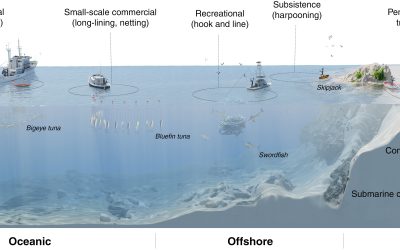
Global origins of tuna and billfish fisheries reveal the transition from coastal access to oceanic exploitation
Global origins of tuna and billfish fisheries reveal the transition from coastal access to oceanic exploitationOcean ecosystems have played a crucial role in people’s lives around the world for...

Ancient Isotopes Reveal Pre-Lessepsian Invasions and Recent Overfishing in the Levant: Insights from Holocene Fish Remains
Ancient Isotopes Reveal Pre-Lessepsian Invasions and Recent Overfishing in the Levant: Insights from Holocene Fish RemainsIn our latest paper in the journal Mediterranean Marine Science,...
Registration for the Oceans Past XI Conference is now OPEN!
Registration for the Oceans Past XI Conference is now OPEN! We are delighted to invite you to join us for the Oceans Past XI Conference, taking place June 15–19, 2026 in Victoria, British Columbia....

Cetaceans presence in Portuguese waters since the Middle Palaeolithic
A recent study published in PLOS ONE sheds light on ancient whaling practices in Portugal, revealing the deep-rooted relationship between humans and cetaceans in the region. By analyzing...
Subscribe to our mailing list
Mission
The ocean is central to life on Earth – it harbours immense biodiversity, regulates the climate, and provides essential services to human societies. Human activities are transforming the ocean at an uncertain pace and scale. Understanding the extent and diversity of these changes requires a historical perspective on human-ocean interactions throughout time.

Mission 1
Advance interdisciplinary research to uncover the history of marine ecosystems and human-ocean relationships.

Mission 2
Connecting researchers, traditional knowledge holders, practitioners, and policymakers.

Mission 3
Generate insights from the past to guide evidence-based actions for healthier oceans and sustainable societies.